HR and payroll software for Egypt
Income tax, NOSI social insurance and the Martyrs' Fund levy calculated in every EGP run, NOSI Form 1 and Form 6 pre-filled as PDF, leave types based on Labour Law 14/2025 and reminders before National IDs and work permits expire — in one system for HR and payroll.
Payslip lines · Egypt
- Income tax—Calculated
- NOSI · employee 11%—EGP 1,100
- NOSI · employer 18.75%—EGP 1,875
On an insurable wage of EGP 10,000
Regulation
What Egyptian employers deal with
Private-sector employment in Egypt is governed by the Labour Law, No. 14 of 2025, which replaced Law No. 12 of 2003 and took effect in September 2025. It sets the rules HR works with every day: indefinite and fixed-term contracts, a probation period of up to three months, annual, sick, casual and family leave, working hours and overtime. Many employers work a Sunday–Thursday week.
Every payslip carries three statutory deductions. Income tax on salaries is progressive, with a personal exemption. Social insurance under Law No. 148 of 2019 is paid to the National Organization for Social Insurance (NOSI) by both the employee and the employer, on an insurable wage between a minimum and a maximum that rise every year. And the Martyrs' Fund levy deducts a small share of salaries. New hires are registered with NOSI on Form 1 and leavers are deregistered on Form 6, each with its own deadline. Foreign employees also need a work permit and a work visa, and both expire.
Mira HR keeps these rules in one place for HR and payroll. Payroll runs in EGP for each Egyptian legal entity, income tax, NOSI and the Martyrs' Fund are calculated in the run from rules stored by the date they apply from, salaries agreed as a net amount are grossed up, and the NOSI steps of hiring and exit become tasks with deadlines and pre-filled forms to check.
The table below shows each requirement, what Mira HR does about it and where to read more. This page describes what Mira HR does; it is not legal advice. Check the rules that apply to your company, your sector and your employees with your adviser.
Checklist
Egyptian requirements and how Mira HR handles them
Leave types under Labour Law 14/2025
- How Mira HR handles it
- A preset based on Labour Law 14/2025 creates nine leave types in one click, most with a reference to their article: annual, sick, casual, maternity, paternity, pilgrimage, examination, childcare and unpaid leave. Annual leave accrues monthly by Article 124: 15 days in the first year, 21 days from the second year and 30 days after 10 years of service or from age 50. Adjust accrual, carry-over and approval to your policy.
- Where
- Core HR
Contract type, end date, probation of up to three months
- How Mira HR handles it
- The employment contract records its type, indefinite or fixed. A fixed contract gets reminders 90, 60 and 30 days before its end date; a probation end more than three months after the hire date is not accepted, and HR is reminded 14, 7 and 1 day before probation ends.
Progressive income tax on salaries
- How Mira HR handles it
- Calculated in every run on the annual scale: seven brackets, from 0 % to 27.5 %, after the personal exemption of EGP 20,000 a year. The brackets and the exemption are stored with the date they apply from, so a change in the law becomes a new version of the rule instead of a new spreadsheet. The phase-out of the lower brackets for high annual incomes is not applied automatically yet, so review those payslips manually.
- Where
- Payroll
Martyrs' Fund levy
- How Mira HR handles it
- Calculated in every run at 0.05 % and kept as its own deduction, next to income tax and social insurance.
- Where
- Payroll
Social insurance (NOSI)
- How Mira HR handles it
- Contributions of 11 % from the employee and 18.75 % from the employer, on an insurable wage within the 2026 limits of EGP 2,700–16,700 a month. Each year’s limits are a separate version, so a period in 2025 is still calculated with the 2025 limits.
- Where
- Payroll
NOSI Form 1 on hire and Form 6 on exit
- How Mira HR handles it
- Both forms come pre-filled as PDF from what Mira HR already holds: the establishment details of your Egyptian legal entity and the employee’s record. The report catalogue shows the filing deadline next to each form — within 14 days of the hire date for Form 1, within 7 days of the exit date for Form 6. You check the form and file it with NOSI yourself.
NOSI steps of hiring and exit, including Form 47 and Form 111
- How Mira HR handles it
- Onboarding for your Egyptian entity adds a mandatory government stage with deadlines and reminders: the social insurance number (Form 47), the social insurance registration (Form 1) and the medical fitness certificate (Form 111); at exit, the deregistration (Form 6). It is a checklist — Mira HR does not generate Form 47 or Form 111 and does not file anything with NOSI.
Salaries agreed as a net amount
- How Mira HR handles it
- Mark a salary package as net, and Mira HR grosses it up to the salary that pays exactly that net amount after tax and social insurance.
- Where
- Payroll
Salary bank transfer file
- How Mira HR handles it
- Coming soonA bank transfer file for Egypt is planned as a CSV layout. Egyptian banks use different formats, so verify the layout with your bank before the first upload. Today Egyptian payroll is calculated in Mira HR and paid through your usual banking process.
- Where
- Payroll
EGP payroll, working week and overtime
- How Mira HR handles it
- Payroll in EGP and a Sunday–Thursday working week preset. With Time & Attendance and Payroll, overtime from timesheets is paid on top of the monthly salary: 1.35× on working days, 1.7× at night, 2× on a rest day and 2× on a public holiday. The night window is fixed at 22:00–06:00, while the law counts night from sunset to sunrise, so review overtime between sunset and 22:00 manually. The law also requires a replacement day off for work on a rest day; grant it as leave.
- Where
- Time & Attendance
National ID, work permit, work visa and social insurance number
- How Mira HR handles it
- Built-in document types for Egypt; the work permit and work visa apply to foreign employees. HR is reminded 90, 60 and 30 days before a National ID, work permit or work visa expires, and an expired document goes up to the owner. The NOSI number is kept with the employee’s documents, with its registration date and no expiry.
Egyptian public holidays
- How Mira HR handles it
- Coming soonPre-loaded Egyptian public holidays are planned. Today you add them to the work calendar yourself.
- Where
- Core HR
FAQ
Egypt questions
Does Mira HR file anything with NOSI for us?
No. Mira HR pre-fills NOSI Form 1 and Form 6 as PDF from the data you already keep, and the hiring and exit steps are tasks with deadlines and reminders, so nobody forgets one. You check every field, complete what Mira HR does not hold, file the form with NOSI and mark the task done, attaching the confirmation where the task asks for it.
How does Mira HR calculate income tax for Egyptian employees?
On the annual scale: the employee’s social insurance and the personal exemption of EGP 20,000 a year come off first, the seven brackets from 0 % to 27.5 % apply to the annual amount, and each month’s run deducts its share. The brackets and the exemption are stored with the date they apply from, so each period is calculated with the rules that applied to it. The phase-out of the lower brackets for high annual incomes is not applied automatically yet, so review those payslips manually.
Which NOSI limits does Mira HR use?
The limits of the period you are paying. For 2026 the insurable wage runs from EGP 2,700 to EGP 16,700 a month, with 11 % from the employee and 18.75 % from the employer. A run for a period in 2025 uses the 2025 limits, because each year is stored as its own version.
We agree salaries as a take-home amount. Can Mira HR work with that?
Yes. Mark the package as net, and Mira HR grosses it up to the salary that pays exactly that net amount after tax and social insurance.
Can Mira HR produce a salary bank file for Egypt?
Coming soon. A bank transfer file for Egypt is planned as a CSV layout. Egyptian banks use different formats, so verify the layout with your bank before the first upload. Until then, Egyptian payroll is calculated in Mira HR and paid through your usual banking process.
Are Egyptian public holidays loaded for us?
Coming soon. Today you add public holidays to the work calendar yourself.
We have companies in Egypt and in the UAE. Can one account handle both?
Yes. Each legal entity has its own country, and payroll runs separately for each one, in the currency and under the rules of its country: Egyptian rules for your Cairo company, UAE rules for your Dubai company. People, documents and leave stay in one system.
From the blog
 Compliance
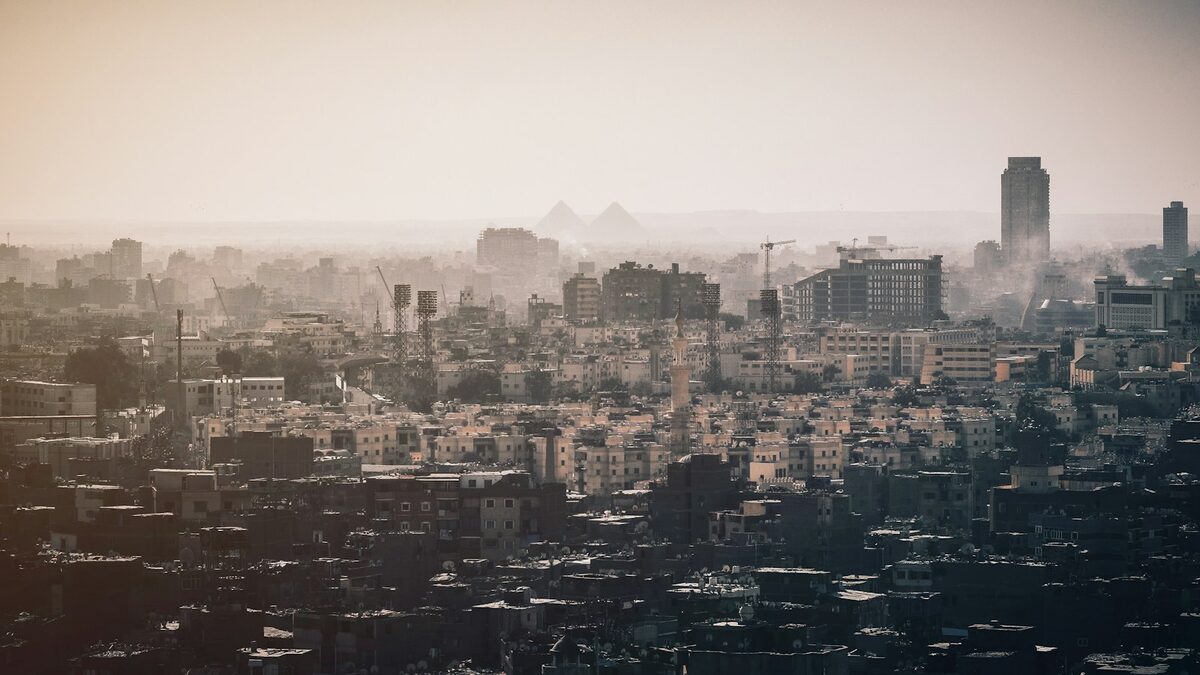
HR and payroll compliance in Egypt: the 2026 guide
Labor Law 14/2025, NOSI, progressive income tax, the Martyrs' Fund levy, the 10% foreign-worker quota, and bank transfers — what Egypt employers need.
 Compliance
Egypt's new labor law (2025): what changed for employers
Egypt replaced its 2003 labor law in September 2025. What changed for leave, working hours, and holidays — and why it's a setup problem, not a legal one.
 Payroll
Egypt social insurance in 2026: the caps moved
From 1 January 2026 the insurable wage is EGP 2,700–16,700, split 11% and 18.75%. The worked math, why it changes every January, and how to avoid fines.
 Payroll
Egypt payroll tax: income tax and the Martyrs' Fund levy
The tax line on an Egyptian payslip is three things: an EGP 20,000 exemption, seven progressive brackets, and a 0.05% Martyrs' Fund levy.
 Payroll
End-of-service pay in Egypt depends on why it ended
Egypt has no Gulf-style gratuity. Under Law 14 of 2025, exit pay depends on how the contract ended and length of service. The math, floors, and traps.
 Payroll
WPS vs Egypt's bank-transfer law: one payroll, two rails
One payroll close, two payment systems, two sets of deadlines: a playbook for finance teams running WPS in the UAE and bank transfers in Egypt.
 Guides
How to choose a localized HR system in Egypt: a checklist
The choice isn't global ERP vs small local tool. It's whether the software really does Egypt and really does HR. The checklist, and the questions to ask.
 Insights
KPIs and 360 feedback in Egypt: start with the culture
In a high-power-distance culture, a copy-pasted 360 gets polite silence. How to run reviews, OKRs, and upward feedback in Egypt without breaking trust.
 Guides
Shift management for Egypt's shops and restaurants
Retail and hospitality run on nights, weekends, and holidays — the hours Egyptian law prices differently. How to keep the rota and payroll in sync.
 Compliance
Time tracking for hybrid teams in Egypt: beyond biometrics
Hybrid work broke the single-turnstile model, and under the 2025 labor law attendance records are a legal duty. Why biometrics are a liability.
 Guides
Is Egypt ready for paperless HR? Yes, with two catches
Egypt's 2025 labor law allows digital employee files, payroll, and contracts. What still needs paper, and why a Drive folder isn't going paperless.
 Insights
Keeping talent in Cairo: it's not about a better desk
You can't out-pay a dollar remote job in Egypt. What keeps skilled people is a visible path, benefits that land, and being heard. Here's how to run it.
 Compliance
Running HR and payroll across the UAE and Egypt
WPS vs Egypt's bank-transfer law, gratuity vs NOSI severance, two currencies, two calendars — what changes when one company runs HR in both countries.
Set up HR for your company in 10 minutes
No implementation fees. Cancel anytime.